Humāyūn: The Struggles and Resurgence of the Mughal Empire

Image
Humāyūn, the son of the great Bābur, inherited an empire full of promise but fraught with challenges. While Bābur’s victories at  Panipat  (1526),  Khanua  (1527), and  Ghaghara  (1529) had established the Mughals in northern India, they had merely subdued—not reconciled—the powerful Afghan and Rajput factions. These groups, though temporarily restrained, remained hostile to Mughal rule, and their resistance would soon surface with full force during Humāyūn's reign. Challenges from within and outside the Empire One of the earliest threats Humāyūn faced came from Bahādur Shah of Gujarat, who, aided by Afghan and Mughal exiles, posed a serious challenge in Rajasthan. Despite Humāyūn’s efforts to conquer Gujarat in 1535, the region remained unstable until Bahādur Shah’s death in 1537, which ended the immediate danger. However, this was just the beginning of a much larger crisis. Meanwhile, in Bihar and Bengal, a formidable figure was rising— Shēr Shah Sūr , an...
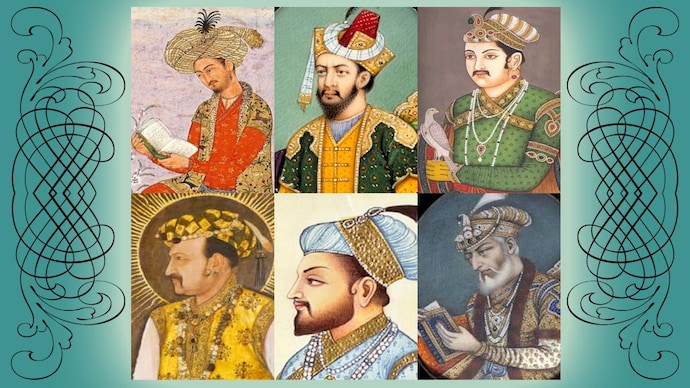
The Rise and Glory of the Mughal Empire

From Babur to Aurangzeb: Facts on the six major Mughal emperors of India -  India Today

Akbar, the great Mughal emperor, strengthened his dynasty both through conquest and strategic alliances. One of his most notable marriages was to Princess Mariam-uz-Zamani, and from this union, their son Jahangir was born. Jahangir continued his father’s legacy, upholding the policies of religious tolerance and cultural integration. By the turn of the 17th century, the Mughal Empire had expanded to dominate nearly the entire Indian subcontinent, cementing its place as one of the largest and most influential empires in history.

The reign of Shah Jahan (1628–1658) is often seen as the golden age of Mughal architecture. Under his rule, the empire saw an unprecedented flourish of monumental construction, the most iconic of which is the Taj Mahal. This magnificent white marble mausoleum, built in honor of his beloved wife Mumtaz Mahal, stands as a testament to both architectural genius and eternal love.

By the year 1600, the Mughal Empire had become a global superpower, not just militarily, but economically as well. It surpassed China to become the world's largest economic entity, controlling an astonishing 24.4% of the global economy. The empire also led the world in manufacturing, producing a quarter of the entire industrial output on the planet.

This remarkable economic and demographic rise was largely driven by Mughal agricultural reforms, which dramatically boosted crop yields and production. At the same time, the empire experienced a significant degree of urbanization, with bustling cities that became centers of trade, culture, and innovation. The Mughal Empire, at its zenith, truly embodied a prosperous and advanced civilization, influencing not only India but the world beyond.

Comments

Popular posts from this blog

Aurangzeb: The Emperor of Ambition and Division

Aurangzeb: The Peak and the Twilight of the Mughal Empire

The Mughal Empire: A Legacy of Power and Culture